🐾 Puppies available now: 3 Pomskies and 1 Siberian Husky✦Next litter expected late December 2026 — reservations open✦Open day on Saturday 5 December in Sierre — by appointment✦Health tests up to date for all our breeding dogs✦ 🐾 Puppies available now: 3 Pomskies and 1 Siberian Husky✦Next litter expected late December 2026 — reservations open✦Open day on Saturday 5 December in Sierre — by appointment✦Health tests up to date for all our breeding dogs✦

Our dogs · FCI-recognised breed

The Siberian Husky

The child of the ice, now the companion of active families.

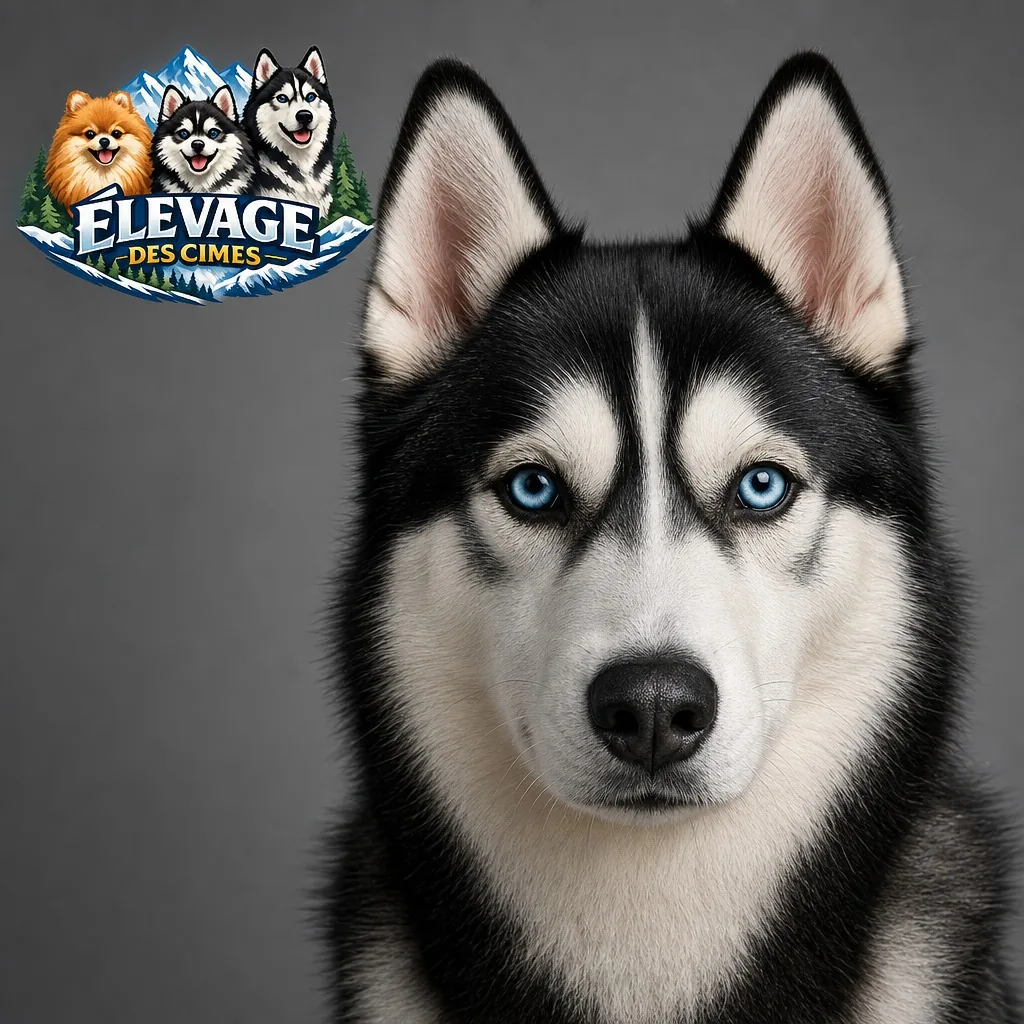
Siberian Husky in the Valais Alps

The child of the Siberian ice

The Siberian Husky is one of the oldest dog types in the world. It was developed by the Chukchi people of north-eastern Siberia, who relied on it to pull sledges over long distances in extreme cold, while the dogs shared family life at night.

That close bond with people over many centuries explains its gentle, non-dominant temperament — whatever its wolf-like looks may suggest. The Husky is not a guard dog. It is a partner.

A legendary feat: in 1925, relays of sled dogs carried diphtheria serum across Alaska to the town of Nome. Balto, the lead dog of the final leg, is commemorated by a statue in New York's Central Park.

A dog made for active families

The Husky is a born athlete. It needs at least two hours of exercise a day — a non-negotiable requirement. In return you get a companion of total loyalty, gentle with children, sociable with other dogs, and breathtakingly beautiful.

Those eyes

The Husky's eyes may be its most striking feature. Blue, brown, or one of each (heterochromia) — every Husky has a gaze of its own. Researchers have linked the breed's blue eyes to a genetic variant near the ALX4 gene.

Its love of freedom

The Husky is a born escape artist. Without enough stimulation it sets out to explore — fences included. That is its nomadic nature, not disobedience. A well-exercised, mentally stimulated Husky is a balanced and endearing dog at home.