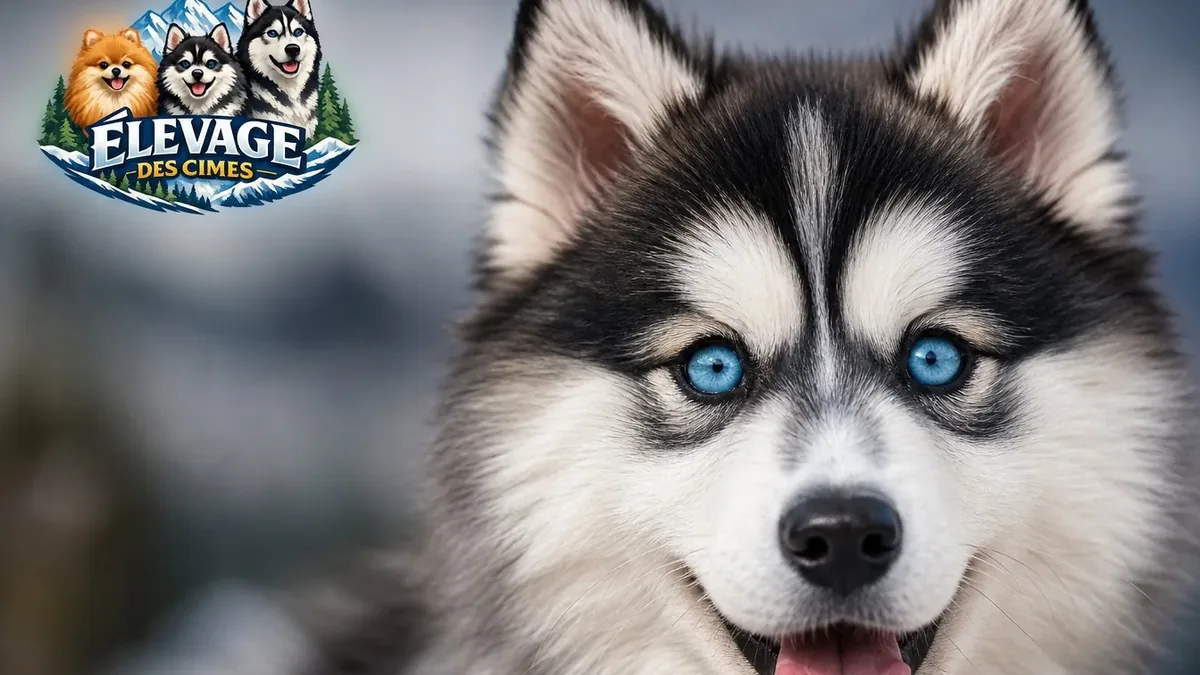
Let us start with the awkward part: the Pomsky is not a breed. It is a cross between a Pomeranian and a Siberian Husky, and no kennel club recognises it as a breed in its own right. You will still see adverts offering a "purebred Pomsky". Walk away from them. A breeder who lies to you about this will lie about the rest.
The FCI does not recognise it, so a Pomsky has no pedigree — and every one of our listings says so.
What we sell are puppies from two parents whose origins, health tests and photographs you are welcome to examine. Not a label.
F1, F2: what those letters mean
An F1 comes from a direct Husky-Pomeranian cross. It is the first generation, and the least predictable one: within the same litter, one puppy may reach six kilos as an adult and its brother twelve. An F2 comes from two Pomsky parents. The type settles, adult size becomes easier to forecast, but nothing is ever guaranteed.
When we give you an adult weight, we give you a range, never a figure. Be wary of anyone promising "four kilos, guaranteed".
Temperament, or why we turn families down
The Pomsky inherits two temperaments that have nothing in common. From the Pomeranian comes deep attachment and a voice — yes, it barks, and it uses it. From the Husky comes energy, stubbornness and an impressive talent for vanishing if the gate stays open for three seconds.
This is not a flat dog for someone who is out ten hours a day. Nor is it a first dog for someone who has never trained a stubborn one. We say so plainly on the phone, even when it costs us the sale.
Moulting, for real
Twice a year your Pomsky drops its undercoat. Not a few hairs: whole tufts, for three weeks, everywhere. If that worries you, this dog is not for you, and it is better to know now than next spring.
What we expect from you
A visit to the kennel before any reservation. Questions. Time to think it over. We have never placed a puppy on the day of a first phone call, and we do not intend to start.